
No Separation
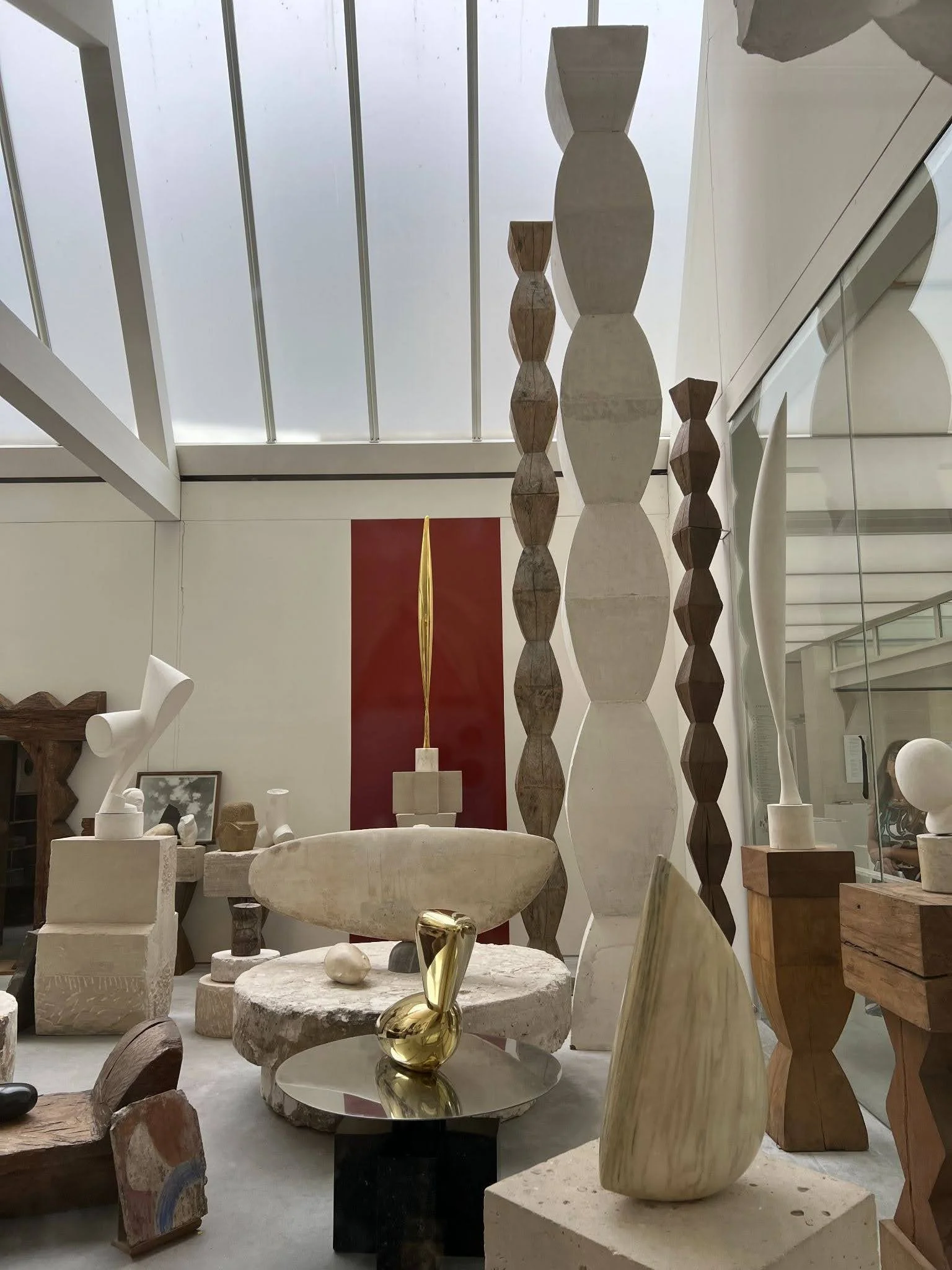
There are still mornings when I wake up here in my studio and feel a little giddy.
After years of visualizing it, I now live and work in a studio on the edge of Austin where art, design, daily life, and gathering all happen under one roof.
To have a place that feels so completely aligned with the life I am living and expanding still feels a little miraculous.
This studio was completed in 2025, but it had been living in my imagination long before.
For years I was designing homes for other people while quietly imagining a place that could hold all the different parts of who I am—designer, artist, collector, homebody, and host.
The design process with Pollen Architecture was remarkably smooth. Arrived at our first design meeting with a photograph of artist Jason Martin's studio in Portugal. At the time, the plan was to build a separate house and studio.
As the project evolved, however, a number of circumstances nudged us toward a different solution. Instead of two structures, we combined them into one. The studio grew, a kitchen was added on the main level, the loft became larger, and a bathroom was incorporated upstairs. What began as a practical adjustment slowly revealed itself as something much more aligned with the way I actually wanted to live.
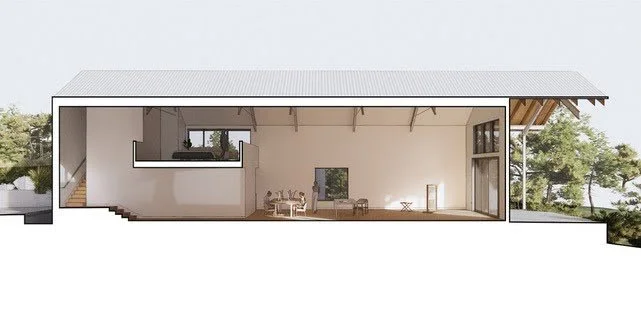
Some people thrive on separation. Distinct places for work, creativity, entertaining, and rest.
I wanted no separation.
After raising my children, I entered found myself in a particularly creative season and wanted to stay close to the process. I didn't want to leave the studio and then decide whether or not to come back. I wanted creativity woven into daily life—to be able to spend a few minutes with a tapestry in the morning, revisit it after lunch, or follow an idea while it was still fresh. Some of the most meaningful progress happens in these small pockets of time.
Creating one structure allowed me to live closer to the work itself.
Not long after deciding to combine everything under one roof, my friend Bryce and I traveled to Paris together. Among the places he was most excited to share with me was the reconstruction of Constantin Brancusi's studio at the Centre Pompidou.
We spent a long time wandering through the space. I was deeply movedcaptivated by the sculptures, but Bryce noticed something else.
"Look," he said, pointing upward.
There, tucked above the studio, was Brancusi's sleeping loft.
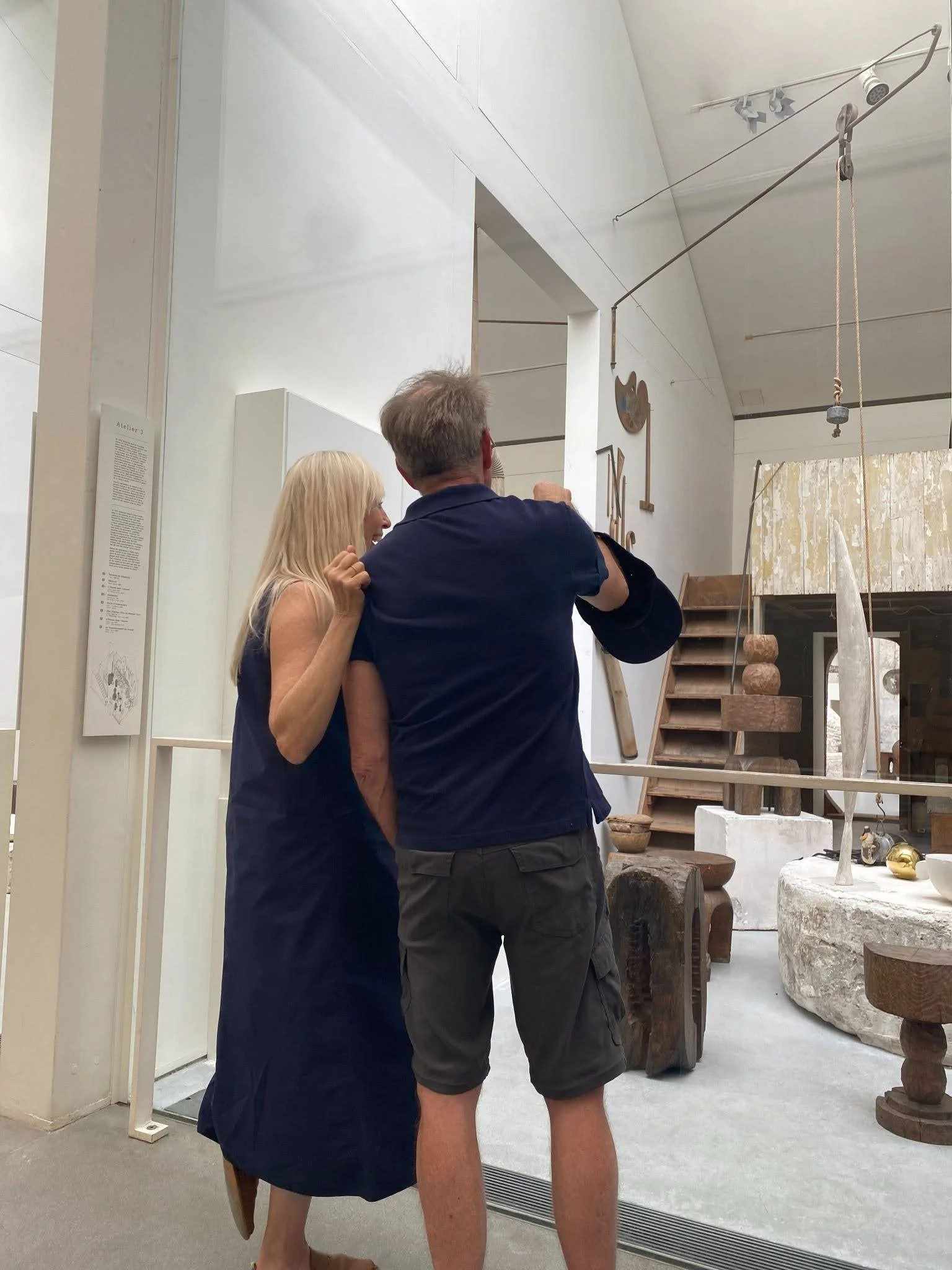
Bryce told me how deeply devoted Brancusi was to his studio. It wasn't simply a place where he made work—it became an extension of the work itself. The arrangement of the sculptures, pedestals, tools, and open space between them was carefully considered and continually refined over decades.
What stayed with me was how sacred the studio seemed to be to him. It wasn't just a workshop. It was a complete environment where art and life existed together. Even after achieving international recognition, he remained at his studio complex at Impasse Ronsin, shaping it throughout his life. Bryce explained that Brancusi even created a floor of red brick and earth, grounding the space in a way that reflected his connection to natural materials and his Romanian roots.
The studio wasn't separate from the art.
It was part of the art.
I remember laughing and saying, "Well, if Brancusi can do it, so can I."
But underneath the joke was recognition.
The place where one creates can also be the place where one lives. Between the two, they don't need to be rigid. A studio can be more than a workspace—it can be a vessel for a life.
About a year after moving into the studio, Bryce and I were once again in Paris, this time celebrating Easter. We spent our days visiting Notre-Dame, museums, and many of our favorite places in the city.
The reconstruction of Brancusi's studio was closed for renovation, which was disappointing. But luck would have it that the Bourdelle Museum—neither of us had visited before—was presenting Magdalena Abakanowicz: Threads of Humanity.
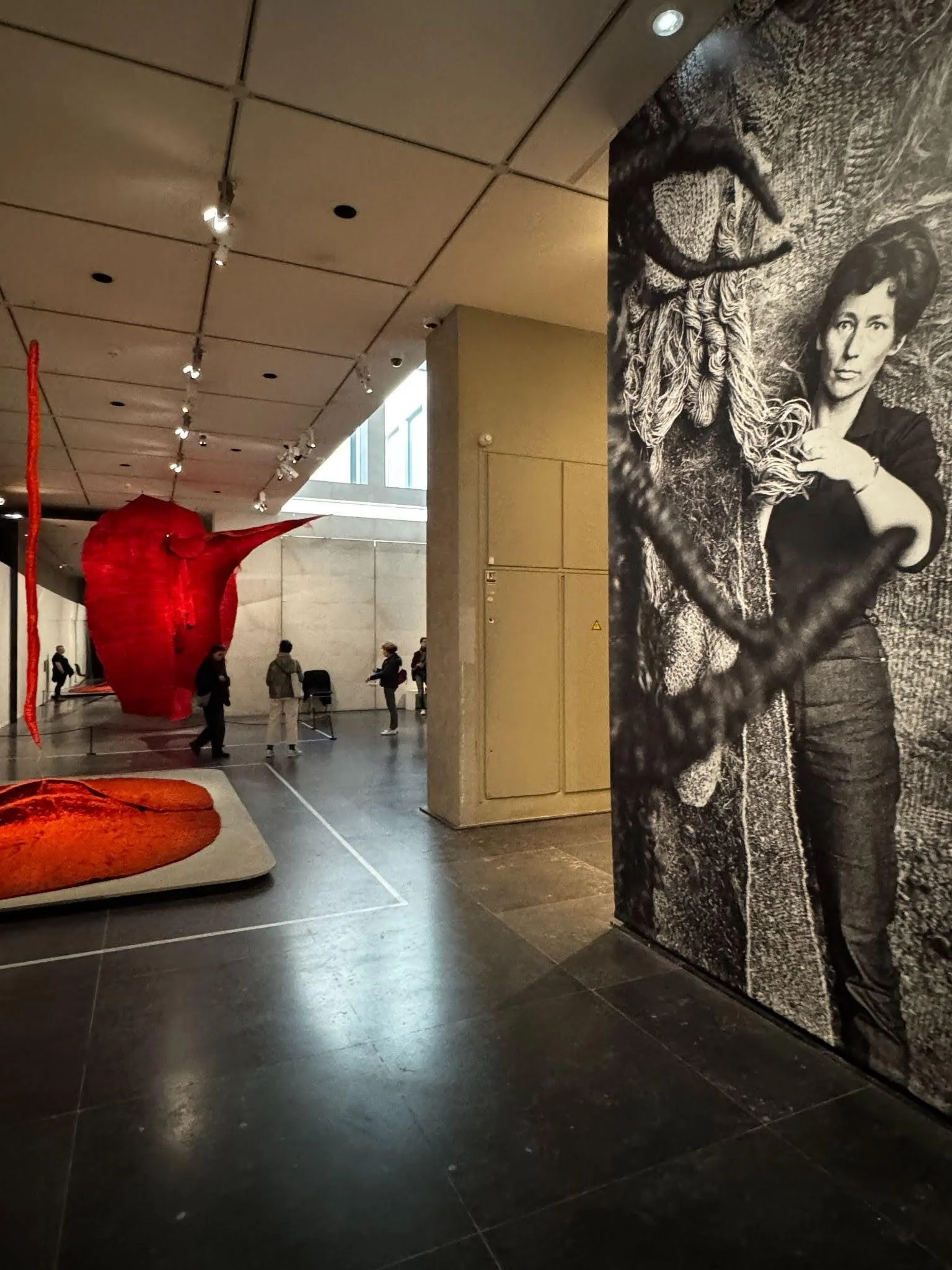
As someone returning to fiber and textile work, seeing an exhibition devoted to Abakanowicz felt especially meaningful.
In one of the films accompanying the exhibition, there was a glimpse of her studio. What immediately caught my attention was a loft integrated into the creative space. I don't know exactly how it was used, but there was something about its presence that resonated with me.
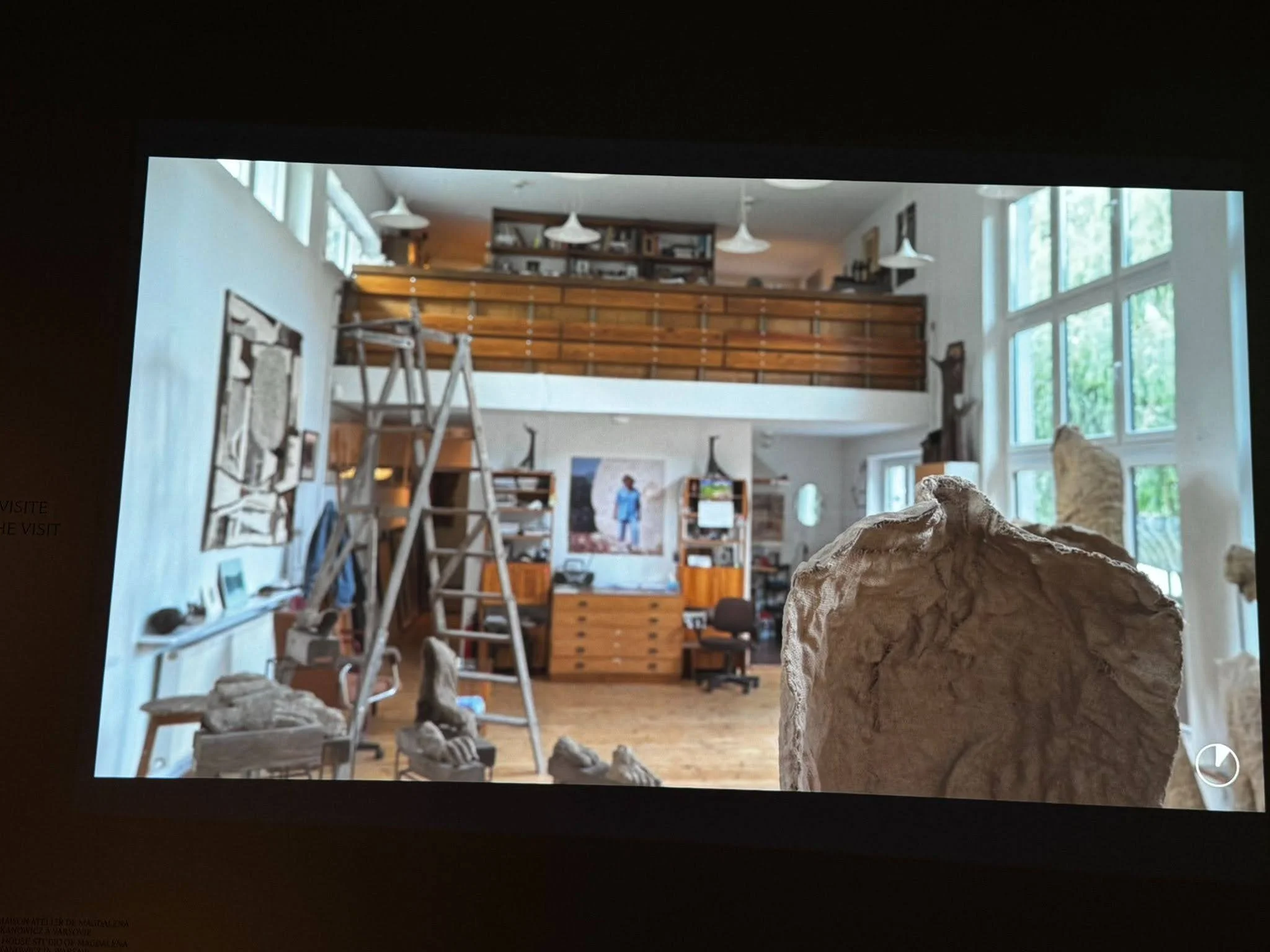
Then we stepped into Bourdelle's studios.
The light, the scale, the countless studies for larger works, and the finished sculptures were extraordinary. What moved me most, however, was noticing yet another loft woven into the creative environment.
Whether these spaces were intended for living, resting, storage, or observation almost didn't matter. What struck me was the flexibility they offered and the way they expanded the studio's possibilities.
One photograph I took that day remains my favorite from the trip. It captures the loft tucked within the studio, bathed in light and surrounded by the evidence of a life devoted to making.
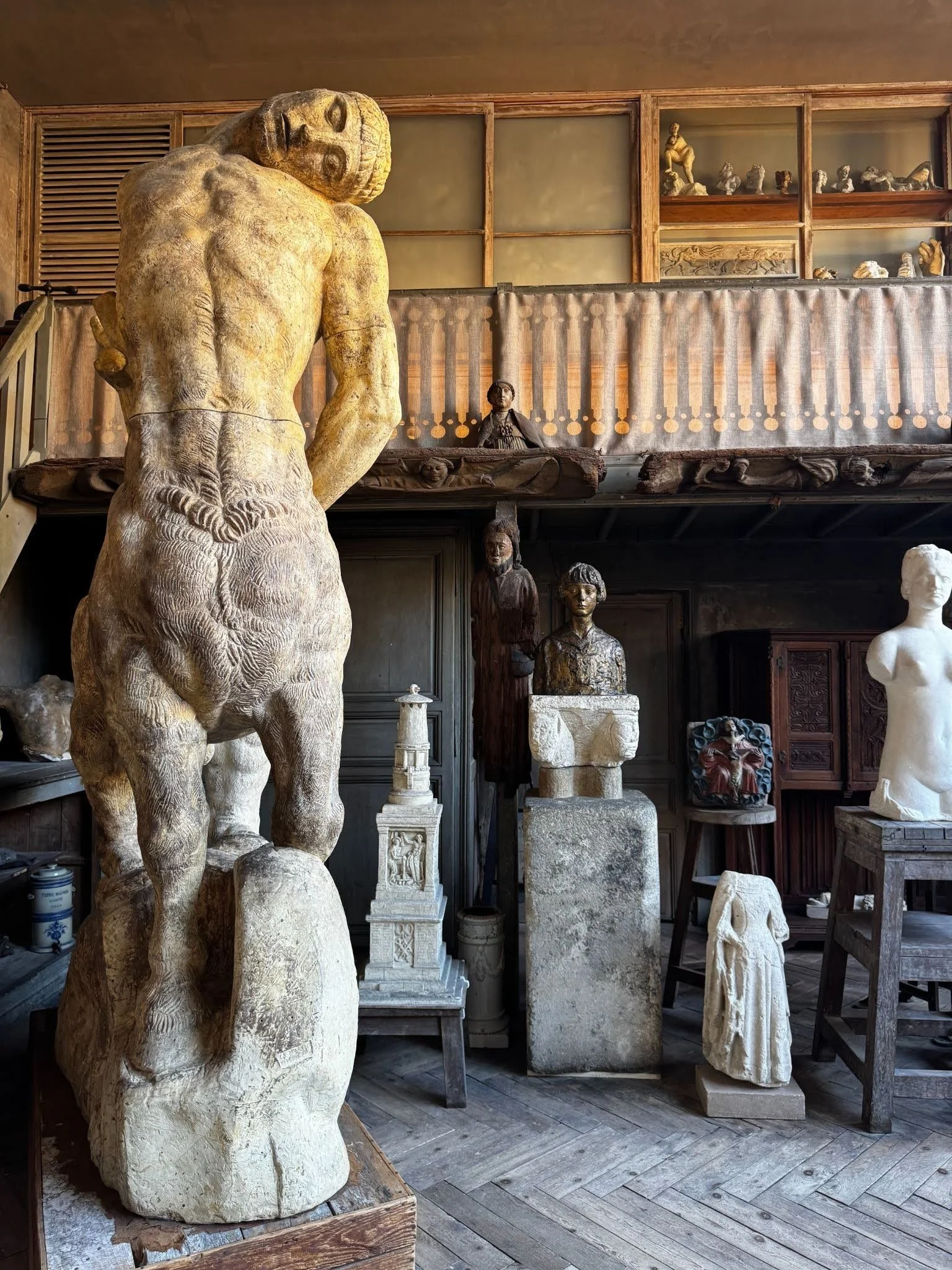
What I had thought was a practical architectural decision to live in my studio space was something deeper.
My architectural heart already knew.
More than anything, this studio feels like a true container for my life.
A place to live, work, create, gather, and continue following whatever breadcrumbs appear next.
— Laura